
Wildfire Mitigation
Defensible Space for Boulder County Homeowners: Where to Start
By Kryn Dykema, ISA Certified Arborist RM-8846A · · 6 min read
Short answer
Start at the structure and work outward. The area immediately around your house matters more than anything you do at the property line, and the highest-value tree work is breaking the vertical connection between ground fuel and tree canopy so a surface fire cannot climb into the crowns.
What is defensible space actually doing?
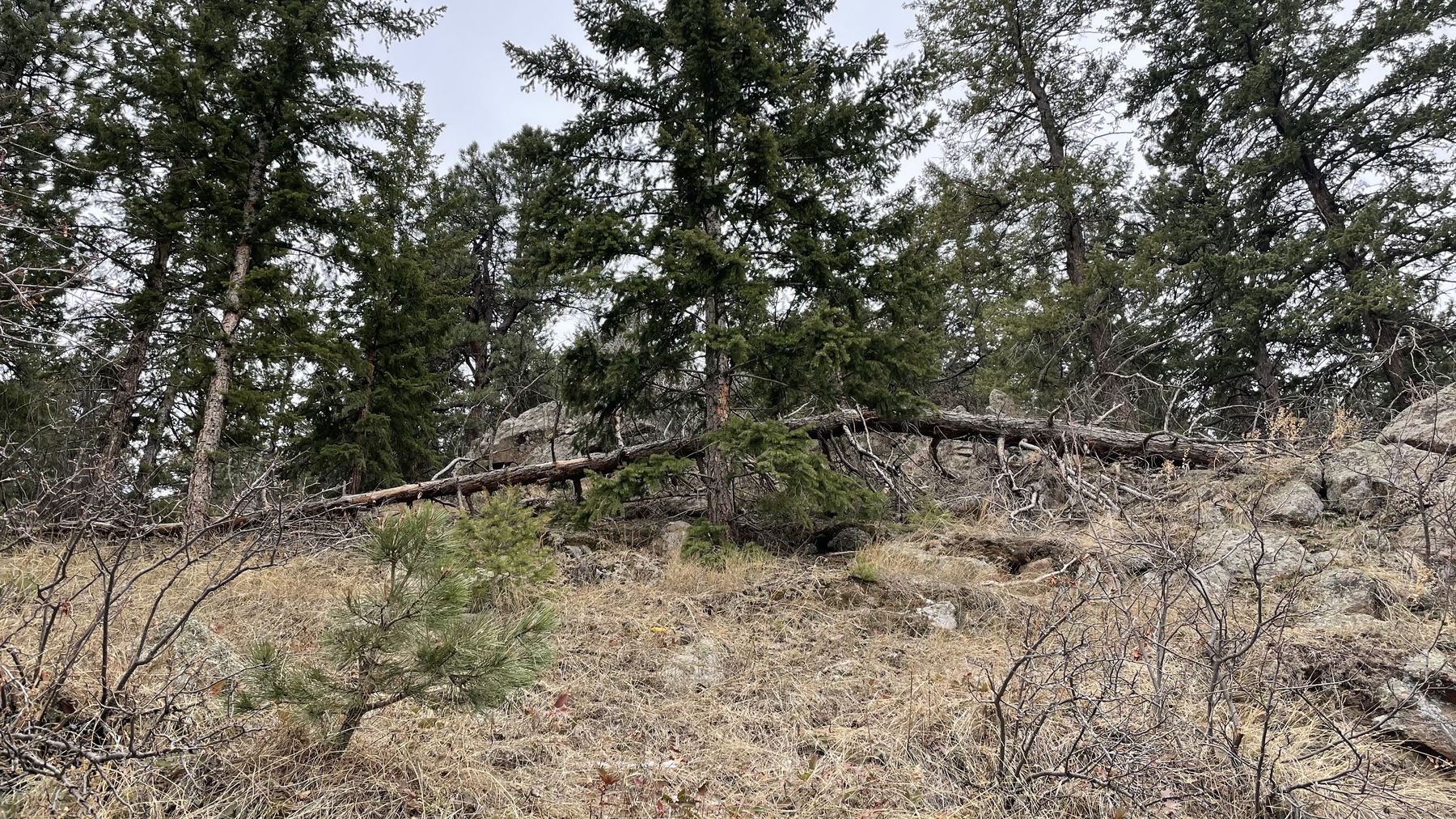
It is changing how fire behaves as it reaches your property, and it is giving firefighters a place they can safely work. Fire needs connected fuel to keep moving. Where the fuel is continuous, from dry grass into shrubs into low limbs into the canopy, a fire can transition from a surface fire to a crown fire, which is dramatically more intense and much harder to stop.
Where those connections are broken, the same fire stays on the ground, moves through with less intensity, and is far more survivable for both the structure and the trees. Mitigation is not about making a property fireproof. It is about changing the character of the fire that arrives.
What are ladder fuels and why do they matter most?
Ladder fuels are the intermediate vegetation layers that connect the ground to the canopy. Tall grass into low shrubs, shrubs into low tree branches, low branches into the crown. Each layer lets fire climb a little higher.
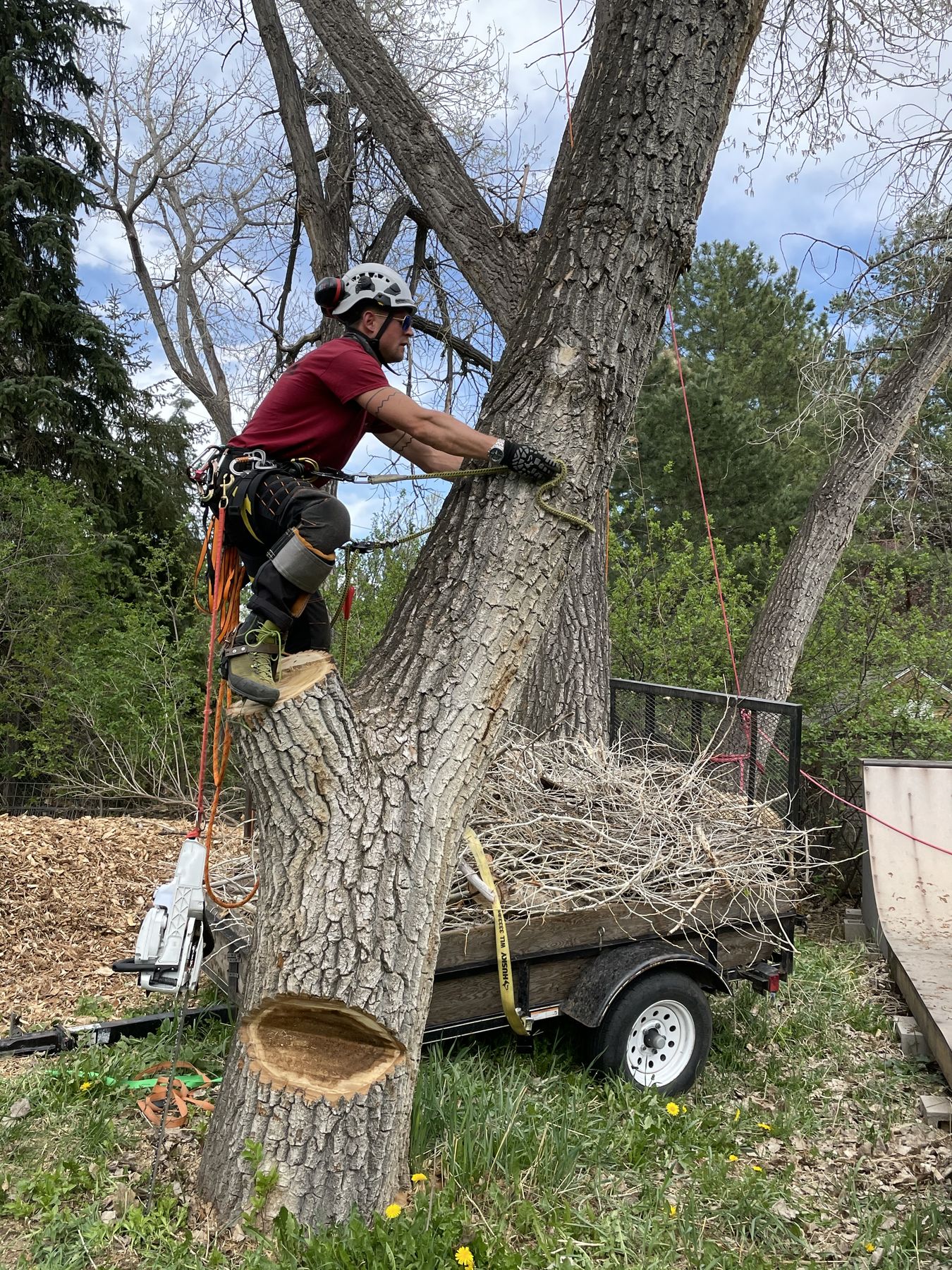
Removing the middle rungs is the highest-return tree work in mitigation because it targets the mechanism directly. In practice that means raising the lower canopy of your trees, clearing shrub mass from beneath tree crowns, and removing accumulated dead material both on the ground and standing in the trees.
- Raise lower limbs so there is vertical separation between shrubs and tree crowns
- Clear dense shrub masses growing directly under tree canopies
- Remove dead branches, dead standing shrubs, and heavy ground litter
- Thin dense clumps so neighboring tree crowns are not touching
- Pull any growth that is in contact with the roof, eaves, or chimney
Where should I start if I can only do one thing?
The zone immediately against the structure. Defensible space is organized by distance from the building, and priority runs from the house outward, not the other way around. The most common serious problem is also the easiest to fix: shrubs and juniper mass planted tight against the siding, dead material accumulated in that bed, and tree branches touching the roof.
Working outward from there, the goal shifts from removing fuel to spacing it out. You are not clearing the land, you are ensuring that fuel is discontinuous enough that fire has to work to move between it.
Does mitigation mean cutting down my trees?
No, and this is the single most common misconception. A well-mitigated property in Boulder County can retain substantial healthy tree cover. The work is about spacing, vertical separation, and dead material, not clearing.
On most lots, mitigation looks like raising lower limbs, thinning dense clumps so crowns are separated, removing dead and diseased trees that are contributing fuel without contributing shade, and getting vegetation off the structure. Healthy, well-spaced, limbed-up trees are compatible with defensible space. Dense continuous fuel is not.
What is different about the mountain properties?
Elevation changes the whole picture. Up Boulder Canyon toward Nederland, and out toward Lyons and Allenspark, the tree population shifts to conifers, and so do the concerns: dense stands with interlocking crowns, drought stress, bark beetle pressure, and heavy accumulated dead material on the forest floor.
Conifers also burn differently. Their resinous foliage and retained dead lower branches make them far more likely to carry fire into the crown than a deciduous tree of similar size. On those properties crown spacing and removing the dead lower ladder become the central work, and the scale is a forest management problem rather than a landscaping problem.
Can an HOA get its common areas assessed?
Yes, and it is often where the real exposure sits. Individual homeowners can do everything right on their own lots while the untreated fuel load lives in the shared greenbelt, the drainage corridor, or the open space buffer between phases.
Assessing common areas alongside individual lots gives an association a realistic picture of its actual risk and a defensible basis for prioritizing spend. Property and HOA assessment is part of what Boulder Tree Surgeon does, and the assessment comes from someone who worked as a woodland firefighter for a number of years before working as an arborist.
Answers
Related questions
How far out from the house does defensible space need to go?
Defensible space is organized in zones by distance, with the closest zone being the most critical and treatment extending outward from there. The right distances and intensity for a specific property depend on slope, aspect, dominant vegetation type, and construction, which is what an on-site assessment determines. A steep slope below a house behaves very differently from flat ground.
Is fire mitigation a one-time job?
No. Vegetation regrows, grass cures every summer, and dead material accumulates every year. Mitigation is maintenance on a cycle, not a project you finish. The heavy initial work is the largest single effort, and after that it is periodic upkeep.
What is the best time of year to do mitigation work?
Outside of active fire season and outside of high-wind periods is preferable, and cooler months are generally easier for the work itself. That said, mitigation done at a non-ideal time is far better than mitigation deferred another year. If a property has continuous fuel to the structure, that is the priority regardless of the month.
Do I need mitigation if I am not in the mountains?
Grass and brush fires driven by wind on flat ground have caused severe losses in this county, well outside forested terrain. If you have continuous fine fuel approaching your structure, shrub mass against the siding, or tree limbs on the roof, mitigation applies to you regardless of elevation.
More resources
Deep Watering Trees in Boulder: Why Thirty Minutes Is Not Enough
During the dry season you are not wetting the surface, you are rebuilding a water table. That takes two hours of sprinkler, not thirty minutes.
Soil and Root HealthThe Weed Barrier Under Your Mulch Is Killing Your Boulder Tree
Pull the mulch back, pull the fabric back, and the soil underneath is cracked and bone dry. In a wet climate the water gets through. In Colorado it pools on top.
Tree HealthEmerald Ash Borer in Boulder: Treat It or Remove It?
Boulder is where emerald ash borer entered Colorado. If you own an ash tree here, doing nothing is itself a decision, and it is the expensive one.
PruningWhen to Prune Trees in Boulder, Colorado
Late winter is the default answer, but the right timing depends on what you are trying to accomplish and what species you are working on.
Boulder County
Call for a site visit today
Early site visits and preventative maintenance catch conditions while they are still fixable. Talk to an ISA Certified Arborist about what your trees actually need.
Monday to Friday, 8am to 8pm. Closed Saturday and Sunday. All site visits include a 30 minute arrival window.

 Kryn Dykema · RM-8846A