About
Kryn Dykema, ISA Certified Arborist RM-8846A
Holistic Regenerative Arborist & ISA Certified Tree Care in Boulder, CO
Who runs Boulder Tree Surgeon
Boulder Tree Surgeon is owned and operated by Kryn Dykema, an ISA Certified Arborist (certification RM-8846A) based in Boulder, Colorado, who worked as a woodland firefighter for a number of years before working as an arborist. The practice is licensed and insured.
What is the approach to tree care here?
Arboriculture is both an art and a science. It combines skill and craft with knowledge and fact. Assessing, diagnosing, and managing trees in a way that supports their growth and development is crucial, and it requires both classroom education and field experience.
Trees are extremely valuable to a property and worth protecting, and identifying conditions and diagnosing them properly requires extensive education. Too often arborists are called after trees have been presenting issues for some years and have already entered a mortality spiral. By that point the good options have narrowed considerably.
So the emphasis here is on early site visits and preventative maintenance. Even if your trees look healthy, regular visits from a certified and qualified arborist can catch conditions early and save you thousands long term. Removing a tree is often a genuine loss: it eliminates the value the tree provided as shade, as habitat for animals, and as something you enjoyed, and it is extremely costly to do.
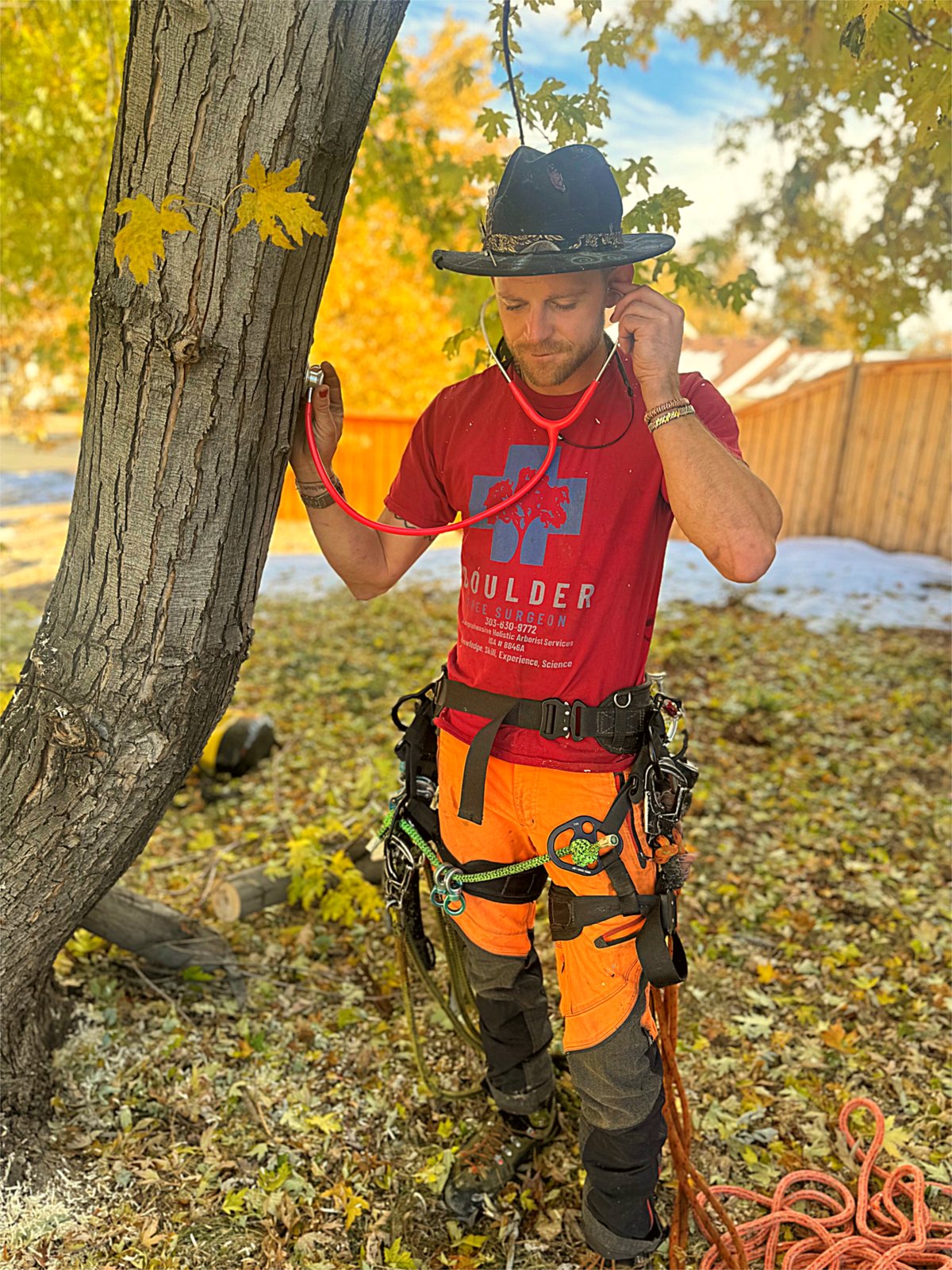
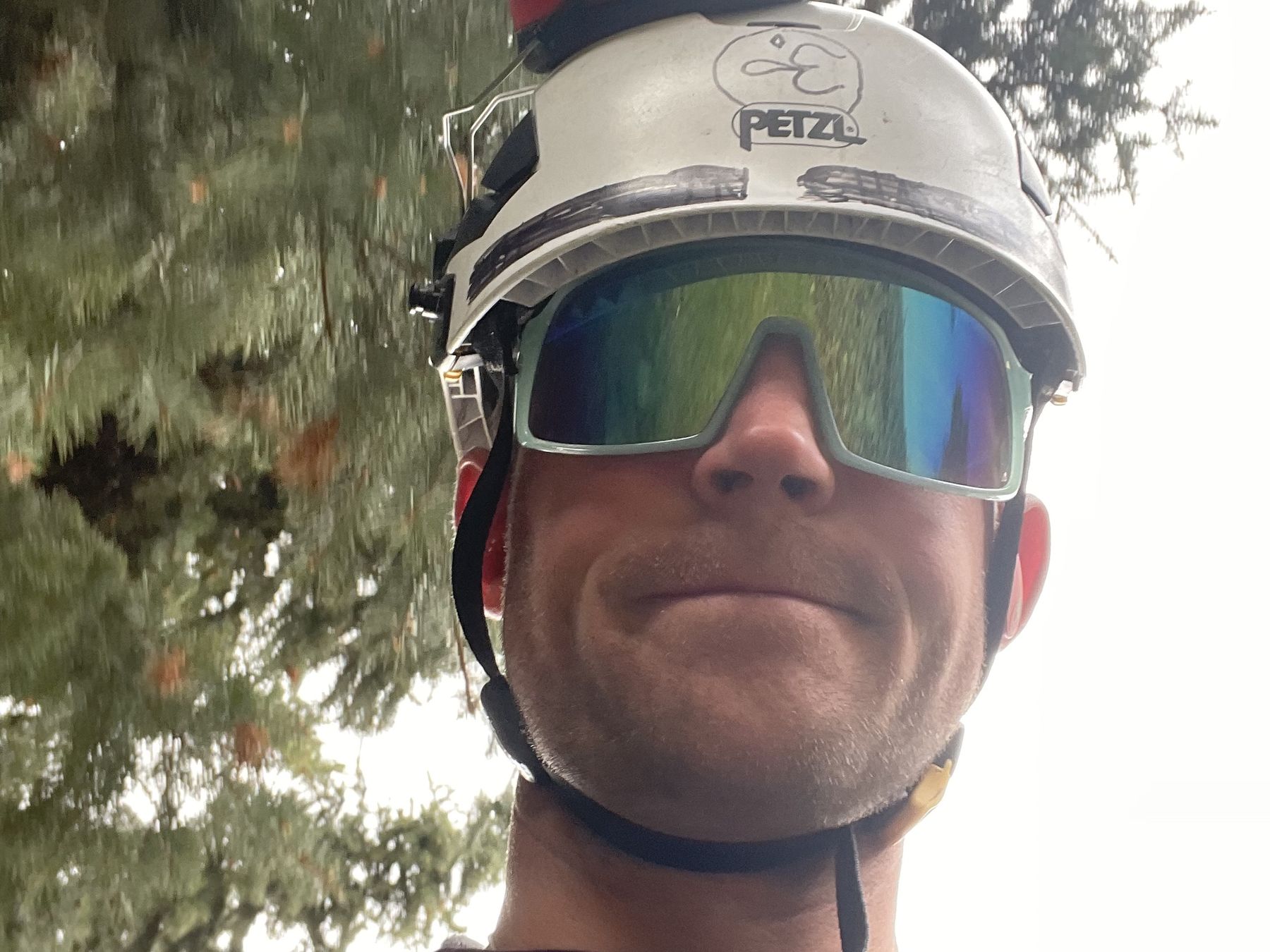
Kryn Dykema on a Boulder job, checking a trunk before recommending anything.
Hear Kryn talk about his work
In his own words - what this practice is about and why he does it.
Kryn Dykema talking about his arborist work and approach to tree care in Boulder
Credentials and background
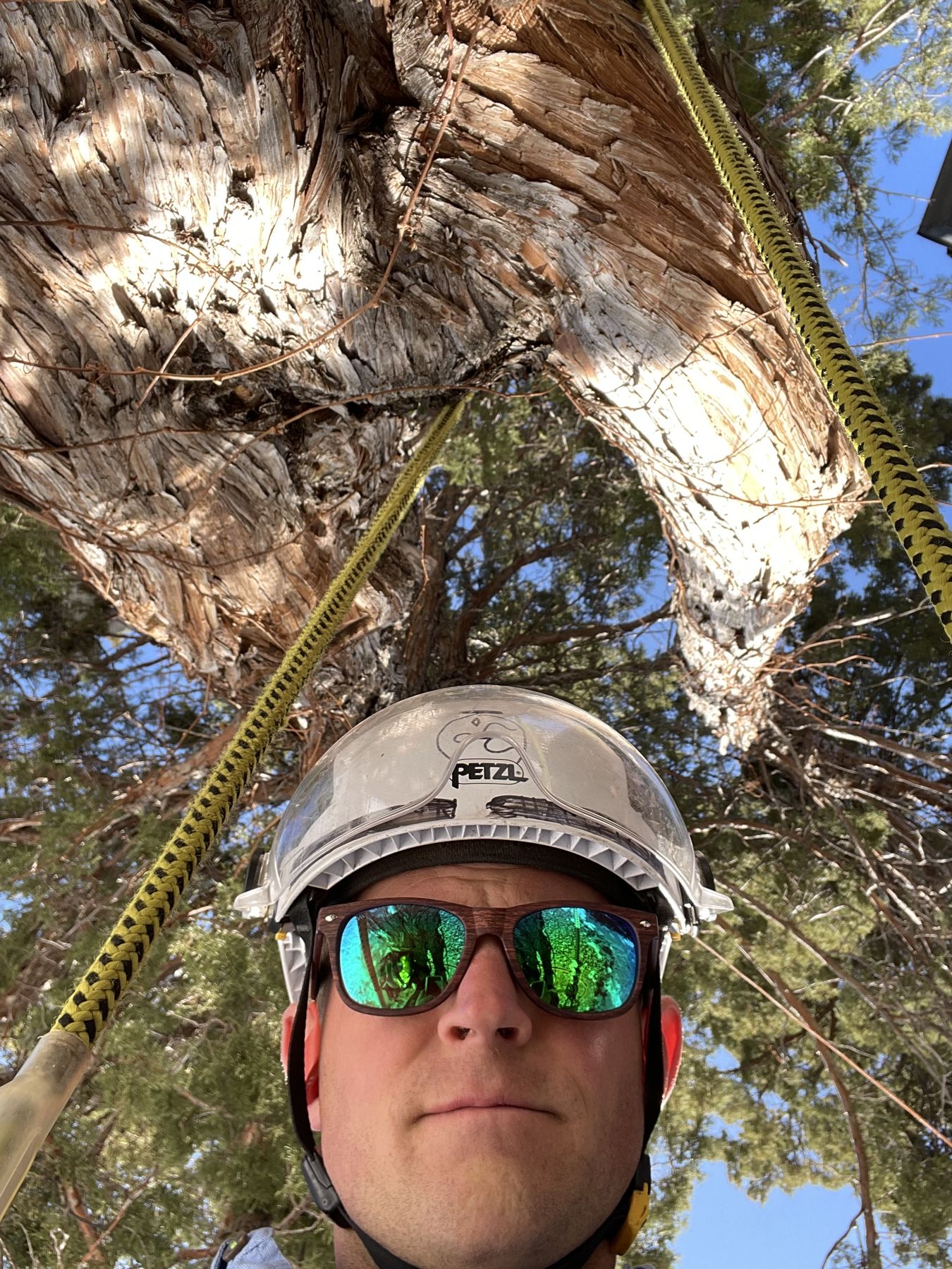
- ISA Certified Arborist
- Certification RM-8846A, Rocky Mountain chapter.
- Licensed and insured
- Carried on all work performed.
- Former woodland firefighter
- Several years of wildland fire experience informing mitigation work.
- Google rating
- 5.0 from 27 reviews on the Google Business Profile.
Why trees?
Trees provide immense value to our mental health and to our environment. A house with trees around it is a different place to live. Kids playing underneath trees measurably do better. Trees provide shade, they clean our air, they keep the soil healthy, and they build a stacked ecosystem, layers of habitat for birds and bees and every other creature that lives in them. And they are beautiful.
They are also long-lived, complex organisms. Something like a human who lives to be two hundred years old with its roots in the soil. We have more in common with them than most people assume, and once you start noticing how much the trees around you are affecting you, it is hard to stop noticing.
What became obvious with more education was how much misconstrued knowledge is out there. People approach trees mechanically. Trees are not machines. Diagnose and assess one as an organism, with a full comprehensive view, and it is the same as having a good doctor. A doctor who only looks at the symptom is only going to treat the symptom, and you are left with the pain or the illness still there.
That is what happens with trees constantly. A root gets cut or a tree takes mechanical damage, that leads to a disease, the disease kills a limb. If you look at the limb and say we will just prune that off, the disease and the original cause are both still in place. In Colorado the soil lacks both moisture and nutrients, and maple trees in a lot of Boulder neighborhoods, more so the further east you go, are deficient in iron. Same as a person who does not eat well and keeps pushing through: eventually you get sick.
When a tree is not looked at until it has a canopy full of dead limbs, the honest framing is stage three or stage four. If you care about your trees the way you care about your family, then we throw the book at it and do everything we can. But nobody lets a lump on the dog go for years before taking it to the vet. We care about our animals. Trees deserve the same treatment, earlier.
What does holistic actually mean on a property?
It means looking at the whole ecosystem, because a property is an ecosystem. The bushes, the shrubs, the grass, the mulch, and what is underneath the mulch. On a Boulder job the mulch gets pulled back, and then the weed barrier under it gets pulled back, and this is so common: underneath it looks like the Sahara Desert. Cracked earth. Squiggle trails where worms used to travel. Completely dry.
That thick barrier does not let moisture through. There is so little moisture in Colorado to begin with that when it hits any kind of resistance it pools on top rather than passing down. In Vermont the water would work its way through the same fabric. Here it does not. So the barrier comes out and thick mulch goes down, which insulates the soil and holds moisture in it.
Grass does the same thing from above. Run thirty minutes of water over a tree with roots four inches down and three inches of turf on top, and the grass takes nearly all of it. It is a basil plant in a small pot: dense root system, and the soil is dry again by tomorrow. Often the right move is to remove the grass around the tree and put down mulch.
There are three keys to soil health. Retain the moisture. Keep oxygen flowing, which is the other thing weed barrier ruins. Keep an insulating layer on top. Those are the things a holistic arborist can see, and there are not many arborists in Boulder taking a full ecosystem perspective.
The same view applies over time, not just across a yard. If you have 50 or 60 year old trees reaching the end of their lives and younger trees coming up underneath them, the young ones need space and cannot be height-limited by the limbs above. And if you have a 40 year old tree, that is the moment to plant the next generation, because a young tree needs about 15 years to establish. Do it then and by the time the old tree is declining there is already a canopy underneath it. Wait until the limbs start falling and you have bought yourself a 15 year gap.
The problems homeowners never see
Number one is underground. Trees cannot be root bound. A tree planted inside a rock wall sends roots outward, they hit the wall, they turn ninety degrees, and the tree girdles itself. The roots circle and circle and eventually the tree dies. His aunt in Denver went through three cherry trees over thirty years. Each one grew to about ten feet, covered itself in cherries, and died at ten years old. The cause was the hole they were planted in: glazed sides. Same failure, three times, thirty years, and nobody looking below grade to find it.
Water, nutrients, root restriction, and soil-borne disease all live down there, out of sight. Some of it is treatable with fungicides, plant resistance activators, or systemic insecticides. But the pattern worth understanding is that insects go after weak trees. A dry ash is far more susceptible to ash borer than a well-watered one. If your immune system is down and somebody coughs near you, you catch it. If you have been eating well, your body fights it off.
The third one is pruning, and it is the one homeowners can control. Trees cannot close over stubs. If a cut is not made right at the branch bark ridge it creates a giant wound. The cambium, the vascular tissue on the outside of the tree, splits below the stub, and heartwood starts to be exposed. Exposed heartwood shortens the life of a tree. Picture a twenty year old maple with its heartwood open. It is like having your bones exposed. That heartwood has to be sealed to keep insects and rot out, and if it goes weak the tree becomes structurally compromised and comes down.
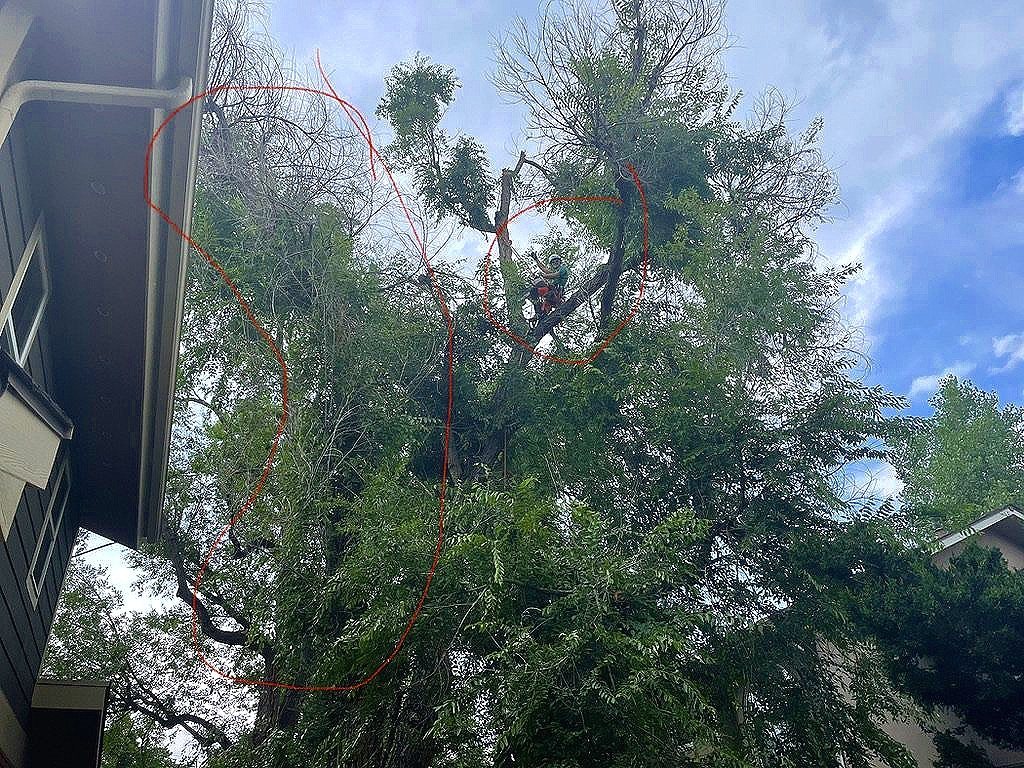
Which is where cavities come from. Climbing a maple on a routine pruning job, there will be a cavity on top of a limb where somebody made a cut horizontal to the sky. Rain falls straight into it, it never seals, and it hollows out. Some of them will take a whole arm. Filling cavities with a structurally sound material is old arboricultural practice, going back to the 1920s, and it is one of the things Kryn does most often in Boulder. He has never seen another arborist in town do it. They leave the cavity open, or they remove the entire limb. But those limbs are often 12 to 14 inches wide, and cutting one out creates a huge wound and removes a large share of the leaf area the tree uses to collect sun and make the sugars it eats. Filling the cavity saves trees.
What it is like to have Kryn on your driveway
Calm, approachable, thorough. A client up Boulder Canyon with a pond and beautiful maples hanging over it chose Boulder Tree Surgeon over every other bid, and it was not the cheapest one. What people respond to is being walked through what is actually happening on their property instead of being handed a number.
Kryn grew up in Boulder, which is rare in this trade. He runs a small business and is in graduate school to become a therapist. The crew is from Boulder too; they went to high school together, and they are easy to have on your property. Clients end up becoming friends. Some of them say they love him. At the end of the day he is your arborist, and then you sit down and have a coffee or a beer.
There is also plenty of straightforward by-the-book work: property management companies send a job, the proposal goes out, it gets approved, and nobody ever meets. That is fine. But what tends to matter most to people is the part that is harder to advertise, which is that he genuinely cares about bringing trees back to life.
The track record is real. Other arborists have looked at a maple with a dead top half and called it a removal. Kryn has climbed those trees, cut the top out, made the cut properly and sealed it so it cannot rot, and the tree is still alive five years later. Same with ash. Read online and you will be told an infested ash has a two year lifespan and that injection and pruning will not work. He has brought ash trees back many times.
It runs the other way too. If a tree cannot handle a pruning, the pruning does not happen. If a client wants a cut made that will kill the tree, he will try to talk them out of it. And sometimes it goes badly anyway. A spruce on Fourth with a root fungus got injected to try to save it and was stone dead within a year. The removal was offered at a discount because the injection did not take. That is the honest version.
What is a mature tree actually worth?
Look at a sixty foot maple that is eighty years old. At the tree farm that tree was four feet tall and about three hundred dollars, plus another hundred and change to plant it. Call it a five hundred dollar tree. Then it needed sixty years of pruning, fertilization, and watering to get where it is. The large ash and maple trees sitting in Boulder yards with dead limbs in them are worth tens of thousands of dollars. A big maple or an oak can be worth fifty thousand in aesthetic value, in intrinsic value, and in what it does for the people who live under it.
Against that, a big property with 20 or 30 trees can expect to spend somewhere around five to eight thousand dollars every ten years on tree work. The maintenance is not the expensive part of owning trees. Losing them is.
The hardest thing to get people to do is water, because water costs money. But deep watering is what actually works, and it is not thirty minutes. During the dry season you are building a water table. That means a sprinkler running over the square footage at the base of the tree for two hours or more to get water soaking 14 inches down, deep enough to move nutrients out of the soil and into the tree. Shake-and-feed around the base first, then deep water, and you have given your tree a giant drink of electrolyte water. It does push the water bill up. It is also incredibly effective, and watching trees go green and vibrant and keep living is the whole point.
What does a property walk-through include?
Kryn offers clients a full spectrum view of what is happening on their property. Not just the tree you called about. For a minimal fee he will walk the property with you and put the findings in writing.
- A walk of the whole property
- Trees, shrubs, bushes, grass, mulch. The mulch gets pulled back and the weed barrier underneath gets pulled back, because that is where most of the problems actually are.
- A written summary
- A write-up of the things you need to keep an eye on, so you are not relying on memory from a conversation in the driveway.
- A map of your property
- Where the trees are, what condition each one is in, and which ones are crowding each other.
- A watering and care schedule
- What to water, how long to run it, when to fertilize, and what symptoms mean it is time to call an arborist rather than wait.
Why does local knowledge matter in Boulder?
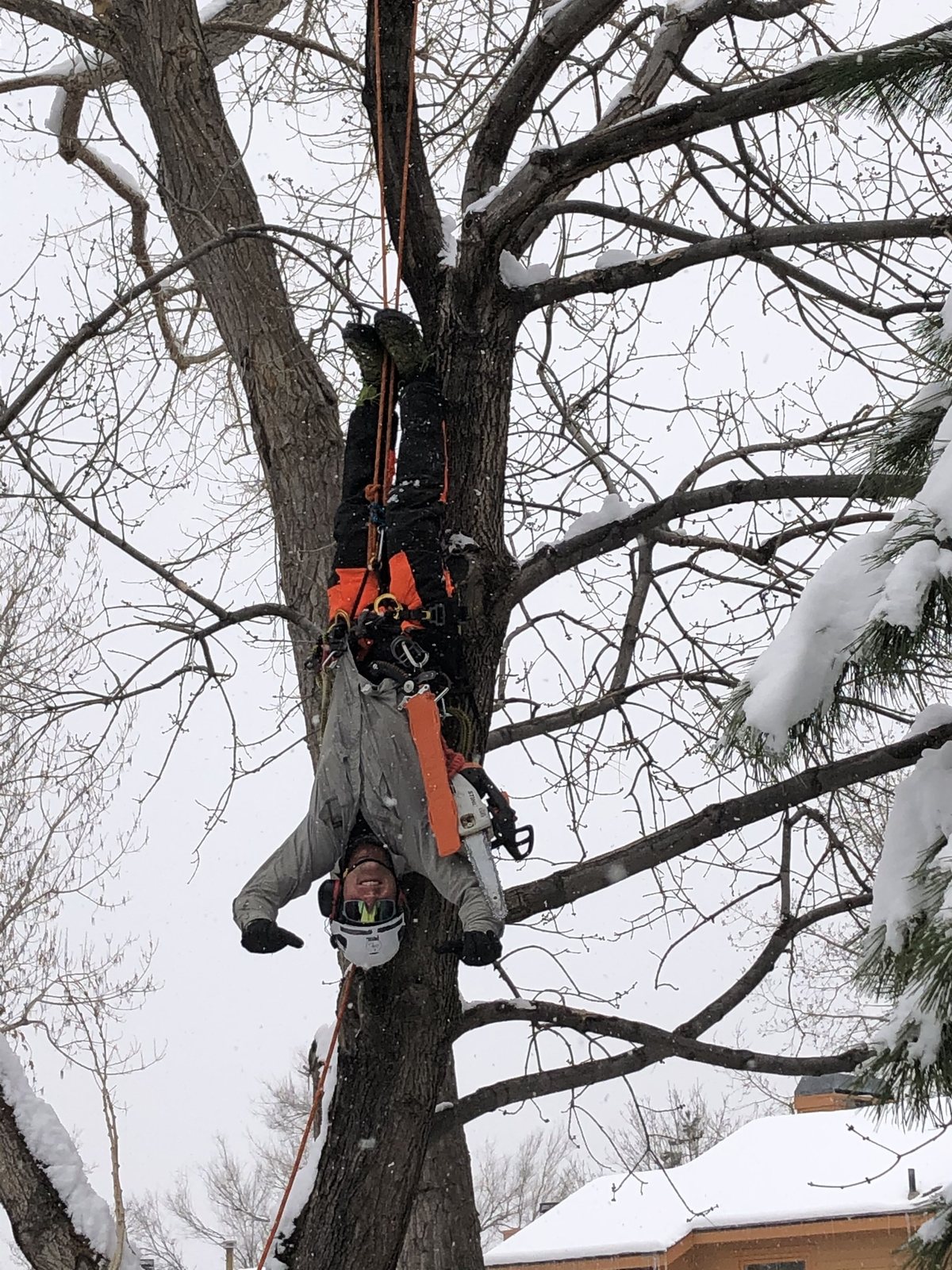
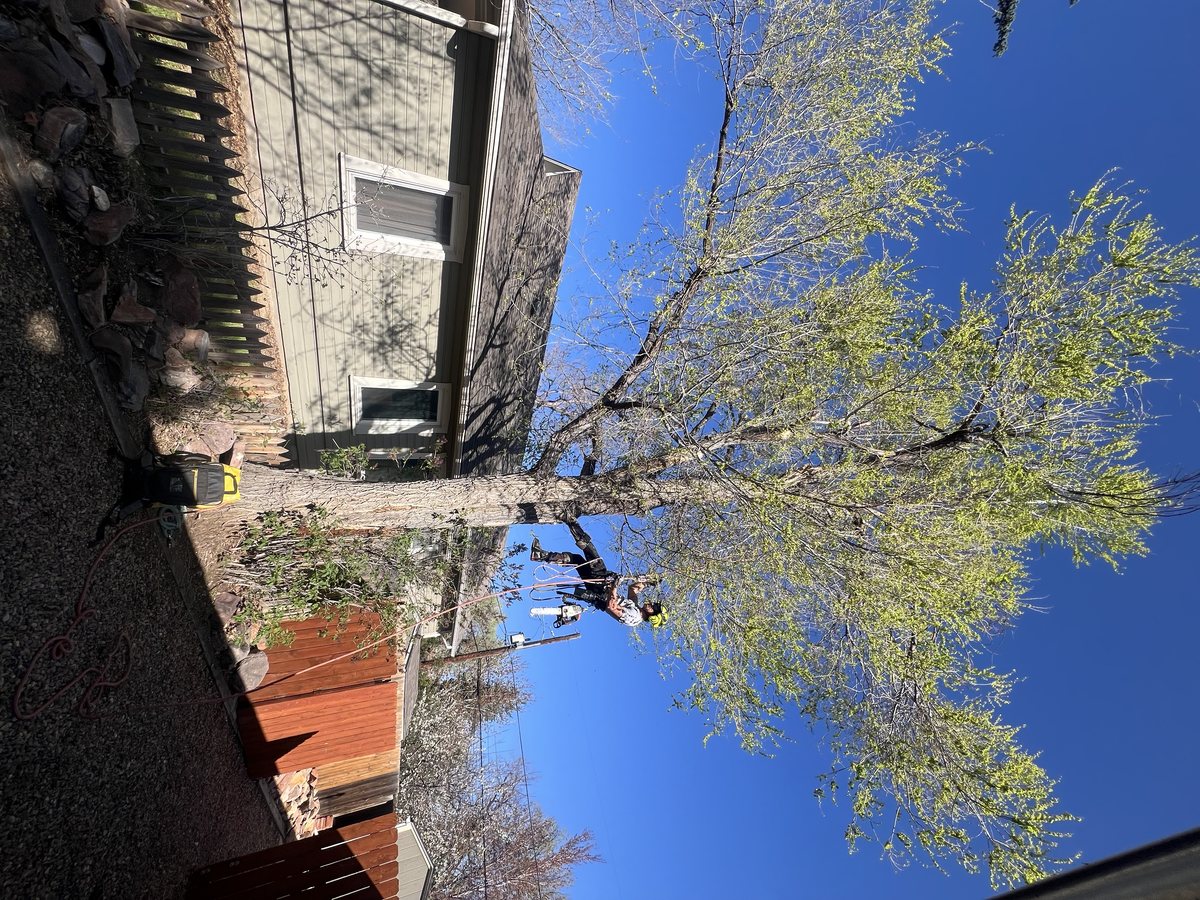
Trees in Colorado get a lot of sun and a lot of exposure to elements like snow and wind, so limbs frequently need structural pruning to ensure their long term integrity. Wet spring snow loads canopies far beyond what they carry the rest of the year, and that is when poorly structured trees fail.
Boulder also carries a specific pest history. Emerald ash borer was first detected in Colorado right here, by Boulder Forestry in September 2013, and the City has been managing it longer than anywhere else in the state. Meanwhile fire is a growing risk across the county, from the canyon communities to the grassland edges.
Pests, diseases, and below-ground conditions are all treatable or avoidable, as long as they are caught early enough, diagnosed properly, and addressed with the right approach. That sequence is the whole job.
Answers
Questions about credentials and approach
What does ISA Certified Arborist actually mean?
The International Society of Arboriculture credential requires passing a comprehensive exam covering tree biology, diagnosis, soil science, pruning standards, cabling, and safe work practices, and it has to be maintained with continuing education. It is the recognized professional standard in the field. Kryn Dykema holds certification RM-8846A through the Rocky Mountain chapter.
Why does the fire background matter for tree work?
Because wildfire mitigation is one of the services offered, and it is the one where field experience changes the quality of the assessment most. Kryn worked as a woodland firefighter for a number of years, so a defensible space evaluation comes from someone who has watched fire move across this kind of ground rather than someone applying a checklist to it.
What does "holistic regenerative arborist" mean?
A holistic regenerative arborist views trees as living members of a broader ecosystem rather than isolated objects to manage. Regenerative practice means improving soil biology, reducing chemical dependency over time, and making interventions that support the tree's long-term health -- not just the immediate job. Kryn came to this approach through working alongside regenerative landscape designers: businesses that have built booming practices because clients respond deeply to land stewardship done right. The same philosophy applies to tree care. The goal is a property that is healthier ten years from now than it is today.
Who actually shows up to do the work?
Kryn and a small crew, all of them from Boulder. He grew up here, and the guys who work for him went to high school with him. That is deliberate. It is rare in this trade to get someone who is actually from Boulder rather than a crew passing through, and it changes how the work gets done and how people are treated on their own property.
Why does an arborist in grad school for therapy matter?
It probably explains the difference people notice in the driveway. Kryn runs a small business and is in graduate school to become a therapist, and the same attention gets brought to a property assessment: listening first, explaining what is actually happening, and not talking someone into work they do not need. Clients tend to become friends. Some of them say so out loud.
Are you licensed and insured?
Yes, Boulder Tree Surgeon is licensed and insured. Note that in the City of Boulder specifically, work on trees in the public right-of-way and on pest-infested trees is restricted to arborists holding the City's Certified Arborist License. If your project involves a right-of-way tree, confirm requirements with City of Boulder Forestry as part of planning the work.
Boulder County
Call for a site visit today
Early site visits and preventative maintenance catch conditions while they are still fixable. Talk to an ISA Certified Arborist about what your trees actually need.
Monday to Friday, 8am to 8pm. Closed Saturday and Sunday. All site visits include a 30 minute arrival window.

 Kryn Dykema · RM-8846A